Why Text and Chat Now Out-Convert Phone and Email
Customer behavior has shifted decisively toward text-based communication. People are more likely to respond to a text than a phone call, more likely to engage a chat window than fill out a contact form, and dramatically more likely to book when they can handle the whole conversation asynchronously from their phone. Service businesses that have not adapted to this shift are losing bookings to competitors who have.
The problem is that most businesses treat SMS and webchat as notification channels — one-way blasts, automated reminders, or static chat widgets that collect a name and email for a later callback. That model leaves the highest-intent moment — the instant a prospect reaches out — completely unconverted. The prospect has to wait for a human to follow up, and by then they have often moved on.
A modern SMS and webchat system flips this. It engages the prospect the second they reach out, carries a real two-way conversation, answers their questions, and books the appointment in the same thread — no form, no waiting, no follow-up gap. The booking happens in the channel the customer already prefers, at the moment their intent is highest.
The Problem With Traditional Webchat
Most website chat widgets are conversion theater. A visitor opens the chat, types a question, and gets an automated 'thanks, someone will be with you shortly' — followed by silence, or by a request to leave an email for a callback. The visitor closes the tab, and the lead is gone. The widget existed, but no booking happened.
The root cause is that traditional chat is built around human availability. If no staff member is watching the dashboard, the chat goes unanswered. After hours, it is effectively dead. And even during business hours, a busy front desk means chats sit waiting while the visitor loses interest.
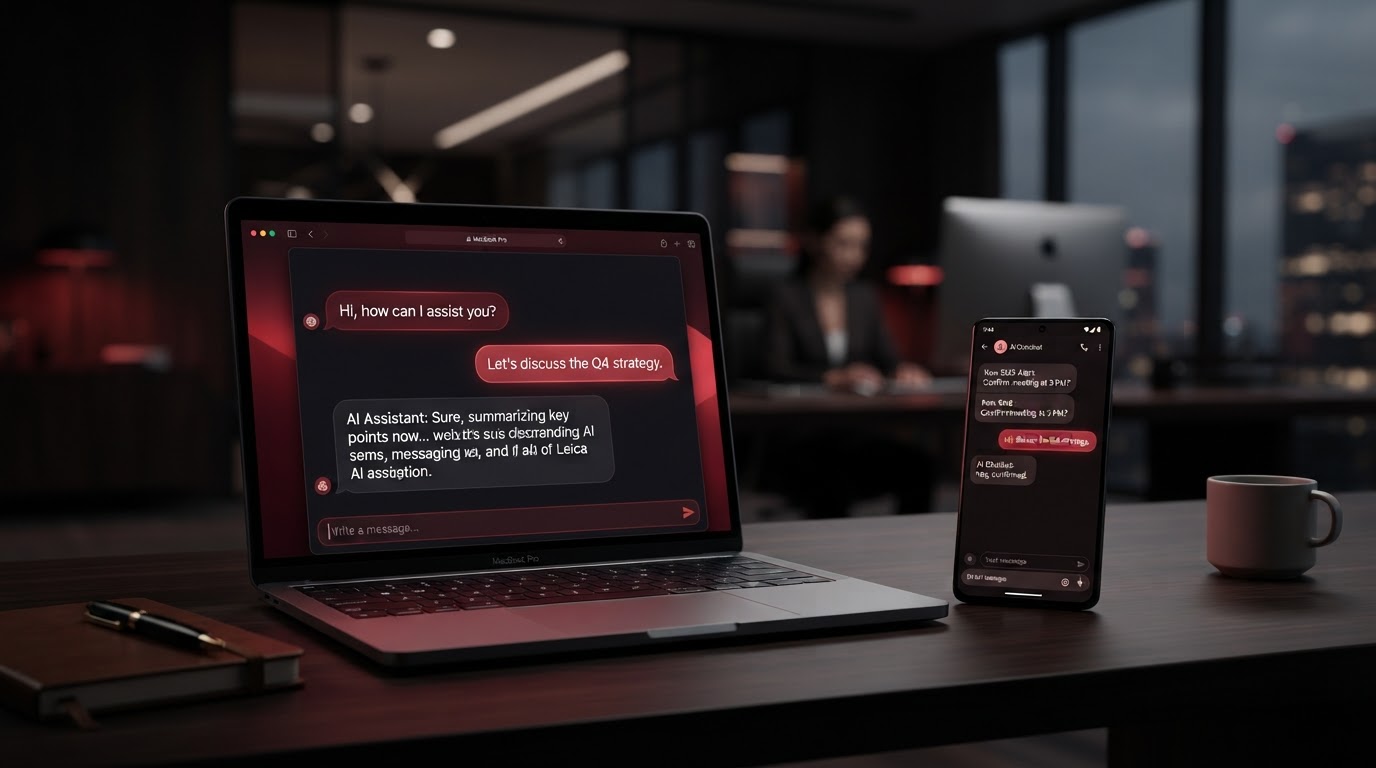
An AI-powered webchat solves this by being instantly available 100% of the time. It greets the visitor, answers questions from your service knowledge base, offers real availability, and books the appointment in the chat itself — then sends a confirmation by SMS. The visitor never waits, and the booking is captured before they leave the page.
SMS: The Channel With a 98% Open Rate
Text messaging has an open rate near 98% and an average response time measured in minutes, compared to hours for email. For service businesses, this makes SMS the single most effective channel for both inbound engagement and outbound follow-up. Yet most businesses underuse it because managing two-way text conversations at scale is hard without automation.
An AI-powered SMS system handles full two-way conversations automatically. When a prospect texts your business line, the AI responds in seconds, answers questions, and books the appointment over text — the channel where the prospect is already comfortable. For outbound use, the system can run database-reactivation campaigns, appointment reminders, and no-show recovery sequences that actually get read and actually get responses.
The combination is powerful: inbound SMS captures leads the moment they text in, and outbound SMS reactivates and retains the customers you already have. Together they turn the phone number you already have into a full revenue channel, not just a way to receive calls.
The Unified Inbox: One Place for Every Conversation
When SMS, webchat, social media messages, and voice all live in separate systems, conversations get lost. A prospect who texts on Monday and chats on Wednesday is treated as two strangers. A booking made over chat does not sync to the SMS reminder sequence. The result is a fragmented customer experience and a steady drip of dropped threads.
A unified inbox solves this by bringing every channel — SMS, webchat, messaging apps, and voice transcripts — into a single thread per contact. The AI handles the conversation across all of them, and your team can see the full history and jump in anywhere. Bookings, reminders, and follow-ups all reference the same contact record, so nothing is duplicated and nothing falls through the cracks.
This is what turns messaging from a set of disconnected widgets into a real communication infrastructure. One inbox, one contact record, one continuous conversation — across every channel your customers use.
Automated Follow-Up That Actually Converts
Booking the appointment is only half the job. The other half is making sure the customer shows up. No-shows are a massive drain on service businesses, and the businesses that control them best are the ones with automated, multi-touch reminder sequences that reach the customer in the channel they actually check.
An SMS and webchat system automates this loop entirely. The moment a booking is made, the system schedules a confirmation, a reminder, and a no-show recovery sequence — all over SMS, all timed to the appointment. If the customer needs to reschedule, they can do it over text without calling. If they no-show, an automated recovery message offers a new slot. Every step is handled without manual effort from your team.
The impact on utilization is immediate. Practices and service businesses that deploy automated SMS reminders routinely cut no-show rates by 30–50%, which directly recovers revenue that was previously lost to empty appointment slots. Combined with instant inbound booking, this turns messaging into a complete capture-and-retain system.
Measuring What Matters
The metrics that define a healthy SMS and webchat operation are response time, booking rate per conversation, no-show rate, and reactivation revenue from outbound campaigns. A well-deployed system moves response time to under a minute, lifts booking rate substantially over form-based capture, cuts no-shows with automated reminders, and generates measurable revenue from customers who were previously considered dormant.
Because every conversation is logged in the unified inbox and tied to a contact record, these metrics are visible and improvable. You can see exactly which channels produce the most bookings, which messages convert best, and where prospects drop off — and adjust the AI's training and follow-up sequences accordingly.
For service businesses, this is the difference between guessing whether messaging works and knowing it does. The data is already in the conversations; a unified SMS and webchat system simply makes it visible and actionable.
Getting Started With Ventry Group
Ventry Group deploys AI-powered SMS and webchat on your existing business number and website in days. We train the AI on your services and booking rules, connect it to your calendar and CRM, and bring every channel into a single unified inbox so your team has full context on every conversation.
If your website chat is collecting emails instead of bookings, or your text leads are waiting hours for a reply, the fastest way to see the difference is to watch the AI book real appointments in real conversations. Book a live walkthrough and we will show you exactly how many bookings your current messaging setup is leaving on the table.
- DH
- Damien L Halliburton
- Head of Revenue Infrastructure, Ventry Group
Damien L Halliburton leads revenue infrastructure strategy at Ventry Group, helping service businesses deploy AI employees that capture, convert, and retain customers around the clock. He has advised hundreds of multi-location brands on AI-driven communication systems.
Explore SMS & Webchat
A unified SMS and webchat system that engages every website visitor and text lead in seconds, answers questions, and books appointments without a single form-to-follow-up gap.
Enjoyed this article?
Subscribe
Get Revenue Infrastructure Insights Every Week.
Join thousands of service-business owners getting actionable AI growth strategies from Damien L Halliburton and the Ventry Group team.
Schedule a Strategy Session
Build the team. Automate the work. Accelerate the business.